
副研究员 博士生导师 硕士生导师
电子邮箱:
所在单位:航空发动机研究院
学历:博士研究生
在职信息:在职

Capillary-Wave-Induced 'Endocytosis' Enables Programmable Core-shell Capsules Formation for Controlled Release
《Small》
We reveal an impact-induced endocytosis-like mechanism that enables spontaneous liquid-in-liquid encapsulation and one-step formation of core–shell droplets.
https://doi.org/10.1002/smll.75064
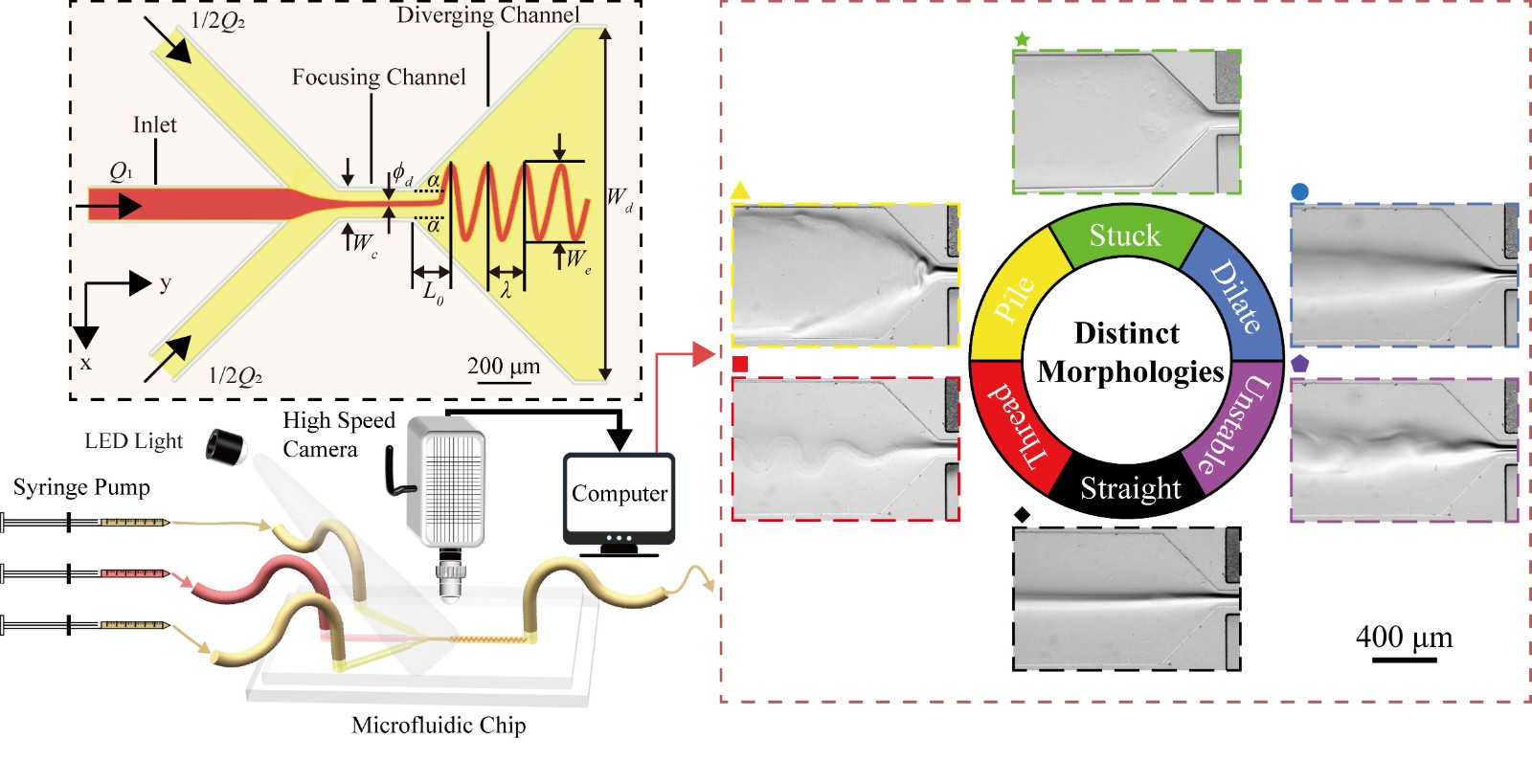
Viscous folding of non-Newtonian micro-threads in diverging microchannels
《Physics of Fluids》
In this work, we experimentally studied the viscous folding dynamics of non-Newtonian threads in diverging microchannels. We investigated the effects of non-Newtonian fluid flow rate and viscosity ratio , as well as diverging channel angle and width, on thread morphology and geometric characteristics. The results reveal that the shear-thinning behavior of non-Newtonian fluids results in six distinct morphologies.
https://doi.org/10.1063/5.0340075
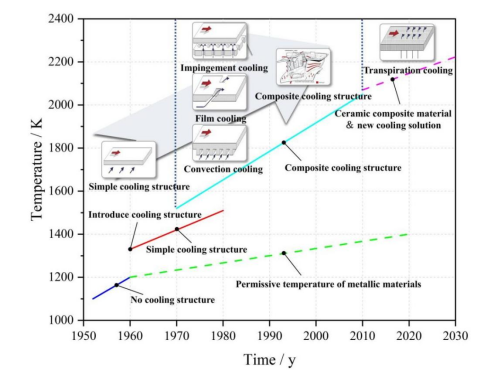
Review of the thermal analysis of ceramic matrix composites and cooling structures for aeroengine applications
《Applied Thermal Engineering》
This paper reviews the progress in thermal analysis methods and cooling structure research for ceramic matrix composites (CMC) in aero-engine applications. By summarizing the current research and existing challenges, the future research directions for ceramic-based high-temperature components are proposed.
https://doi.org/10.1016/j.applthermaleng.2025.129165
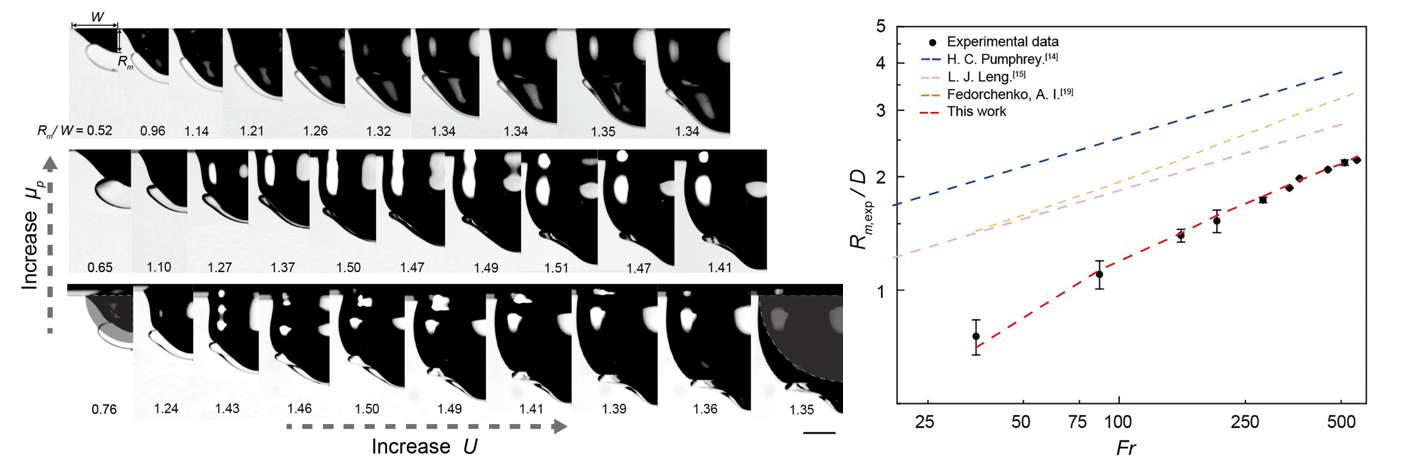
Energy conversion and cavity depth model in droplet impact on an immiscible deep pool: A generalized analysis approach
《Physical Review Fluids》
We reveal how impact energy is partitioned during immiscible droplet impact and establish a revised energy framework for predicting cavity formation in the low-Froude-number regime.
https://doi.org/10.1103/qp89-xhm3
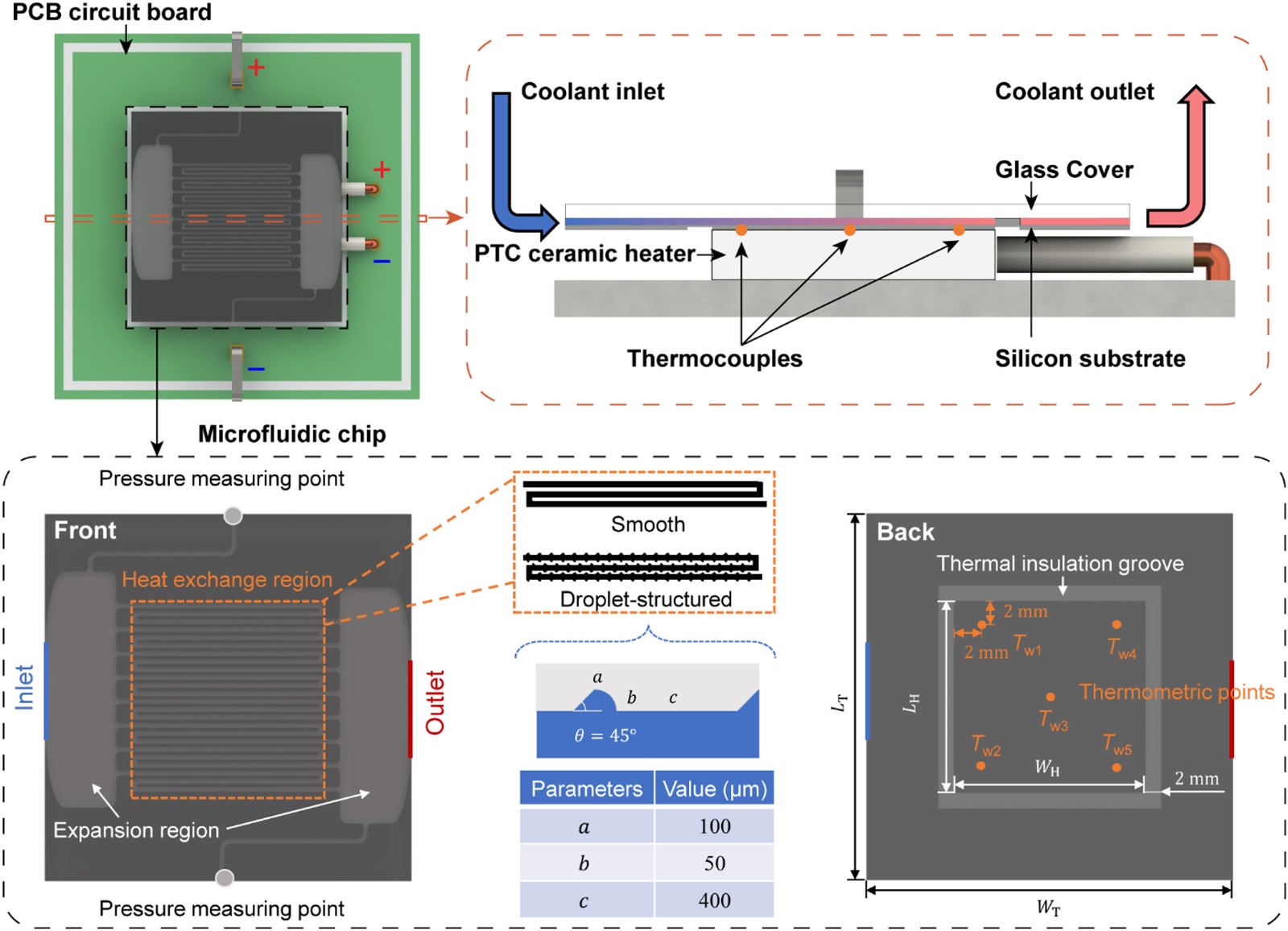
Energy-efficient cooling of silicon-based microfluidic chips enabled by integrated microstructural and surface modification strategies
《International Journal of Heat and Mass Transfer》
We have created silicon-based microfluidic chips that integrate tunable surface wettability (from 21.8° to 164.0°) with droplet-shaped microstructures to address the trade-off between drag reduction and heat transfer in micro-cooling. While superhydrophobic channels cut drag by up to 48.6% at a heat-transfer cost, hydrophilic channels with specific microstructures uniquely enhance heat transfer by 31.6% while also reducing drag. Simulations reveal the underlying slip-length and resistance mechanisms. This integrated platform provides a scalable path for designing adaptive cooling in high-density electronics.
https://doi.org/10.1016/j.ijheatmasstransfer.2025.127632
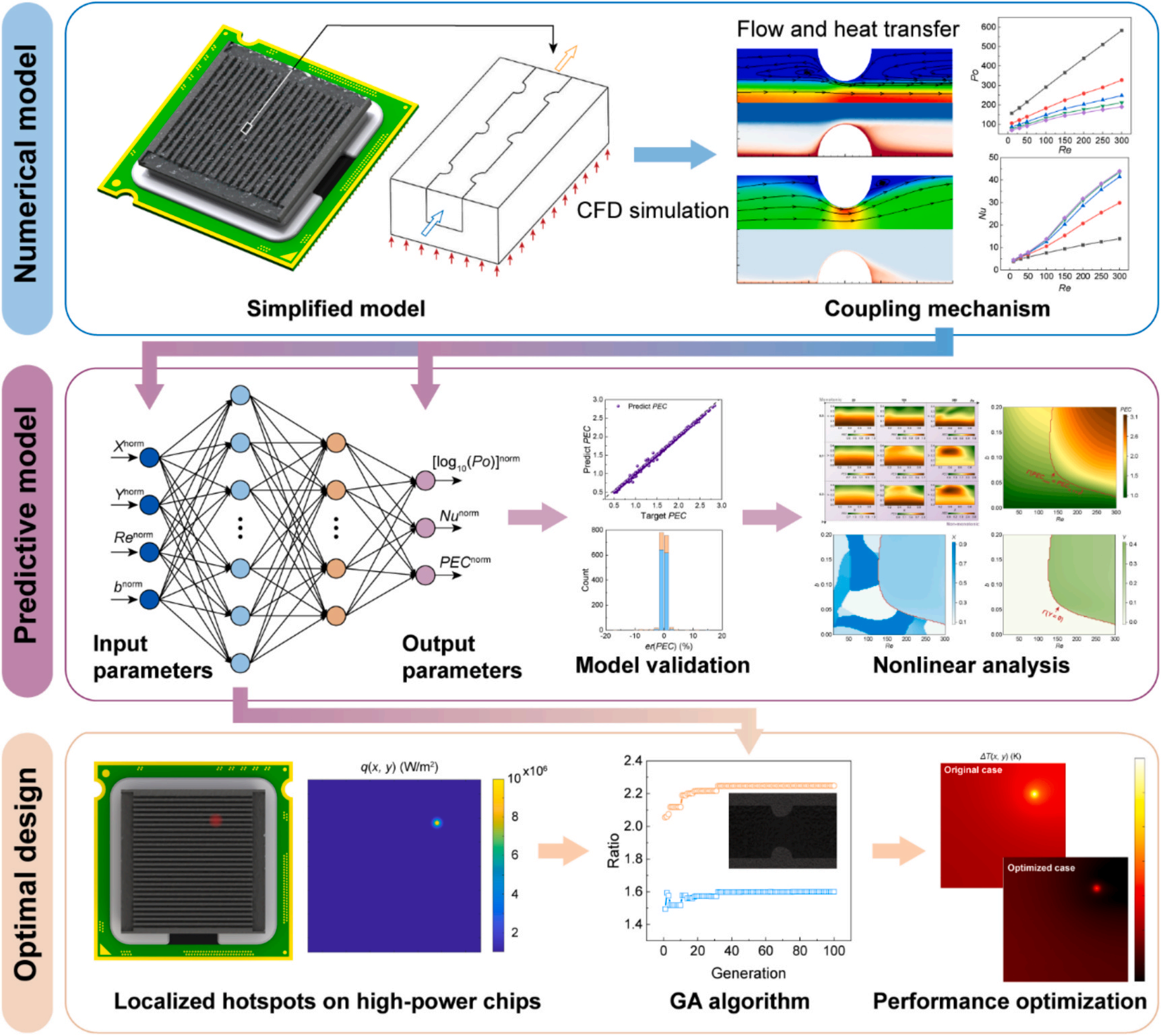
Deep learning-assisted design of slip-coupled microstructures for next-generation microfluidic cooling systems
《Applied Thermal Engineering》
This work has developed a data-driven framework to co-optimize slip boundaries and rib microstructures for advanced microfluidic cooling. The work demonstrates that the slip effect enhances heat transfer while reducing flow resistance. By integrating deep learning with genetic algorithms, an optimal design was pinpointed, achieving a 65.1% reduction in peak temperature rise. This approach provides an intelligent strategy for thermal management in next-generation, high-power-density electronics.
https://doi.org/10.1016/j.applthermaleng.2025.128713
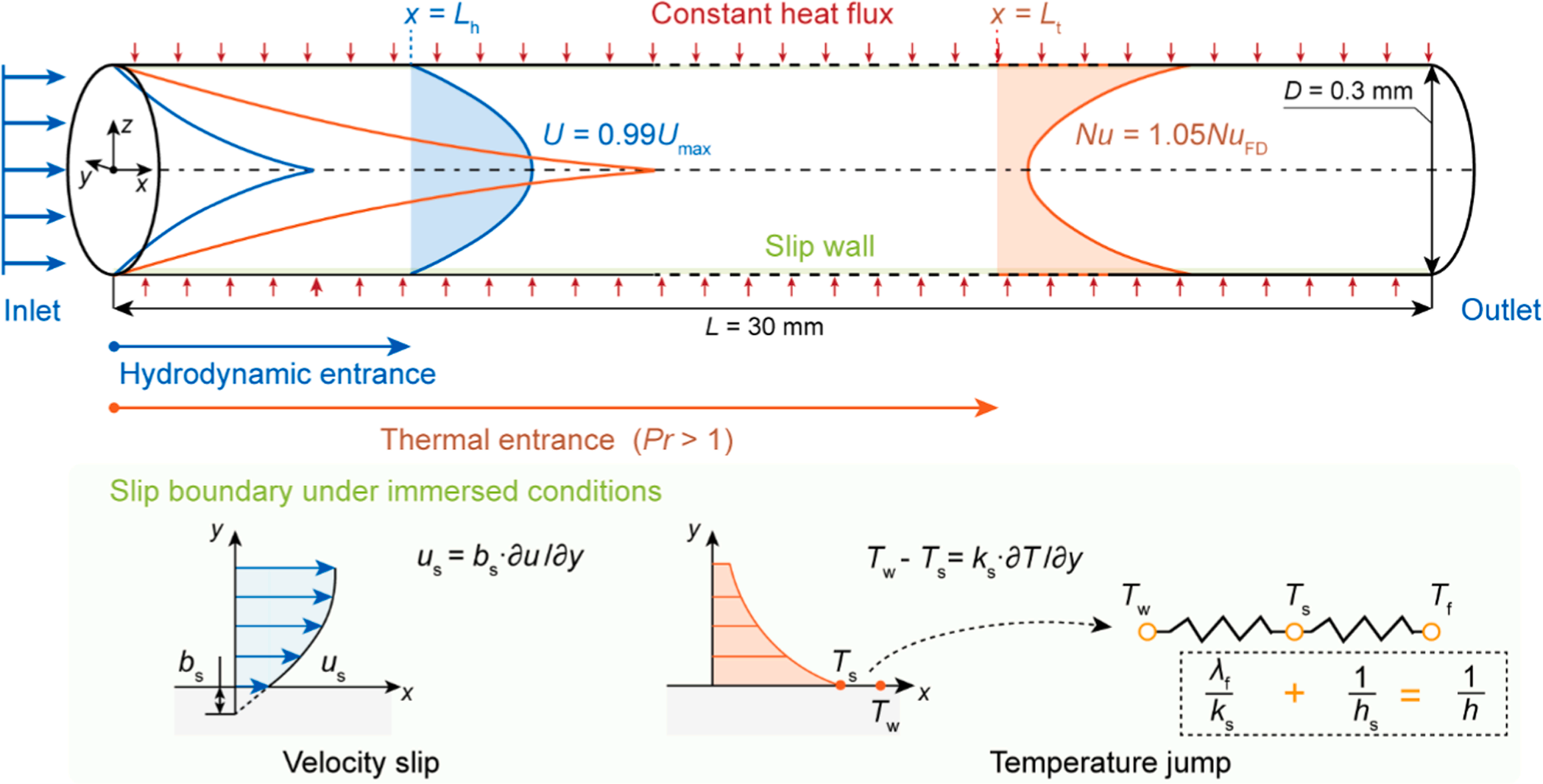
Development of hydrodynamic and thermal boundary layer in the entrance region with hydrophobic surfaces
《International Journal of Heat and Mass Transfer》
New research systematically reveals how hydrophobic surfaces alter flow and heat transfer in microchannel entrance regions. By correlating entrance lengths with Reynolds number and slip length, the study shows slip can cut flow resistance by up to 80.1% while boosting convective heat transfer by 52.1%. A critical coefficient αc is introduced to guide surface designs that achieve both drag reduction and thermal enhancement. The findings provide a predictive framework for optimizing next‑generation microscale cooling systems.
https://doi.org/10.1016/j.ijheatmasstransfer.2025.127618
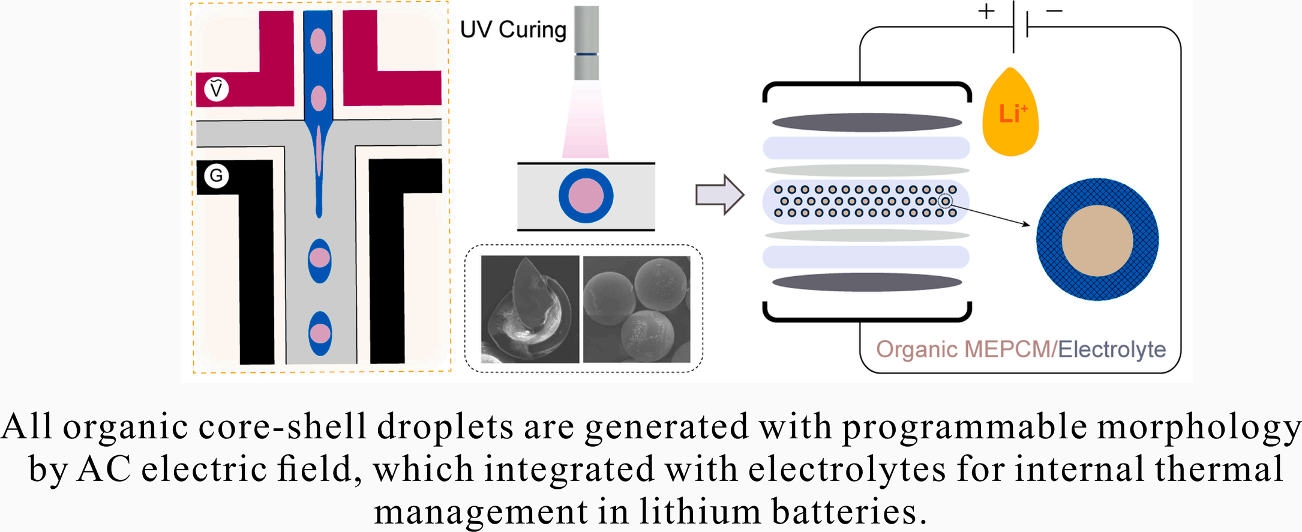
Precise morphology control of all-organic core-shell droplets for synthesis of microencapsulated phase change materials through AC electric fields
《Journal of Colloid and Interface Science》
This study introduces a novel theory to evaluate the generation of complex emulsions. It demonstrates that an applied electric field significantly improves production efficiency and monodispersity, allowing for flexible control over droplet size and core-shell structures. Using this method, the research successfully fabricates organic microcapsules containing phase-change materials, which can be integrated into lithium-ion battery electrolytes to provide an effective temperature-buffering function. This work advances the understanding of colloidal systems and paves the way for functional materials in energy management and related fields.
https://doi.org/10.1016/j.jcis.2025.01.206
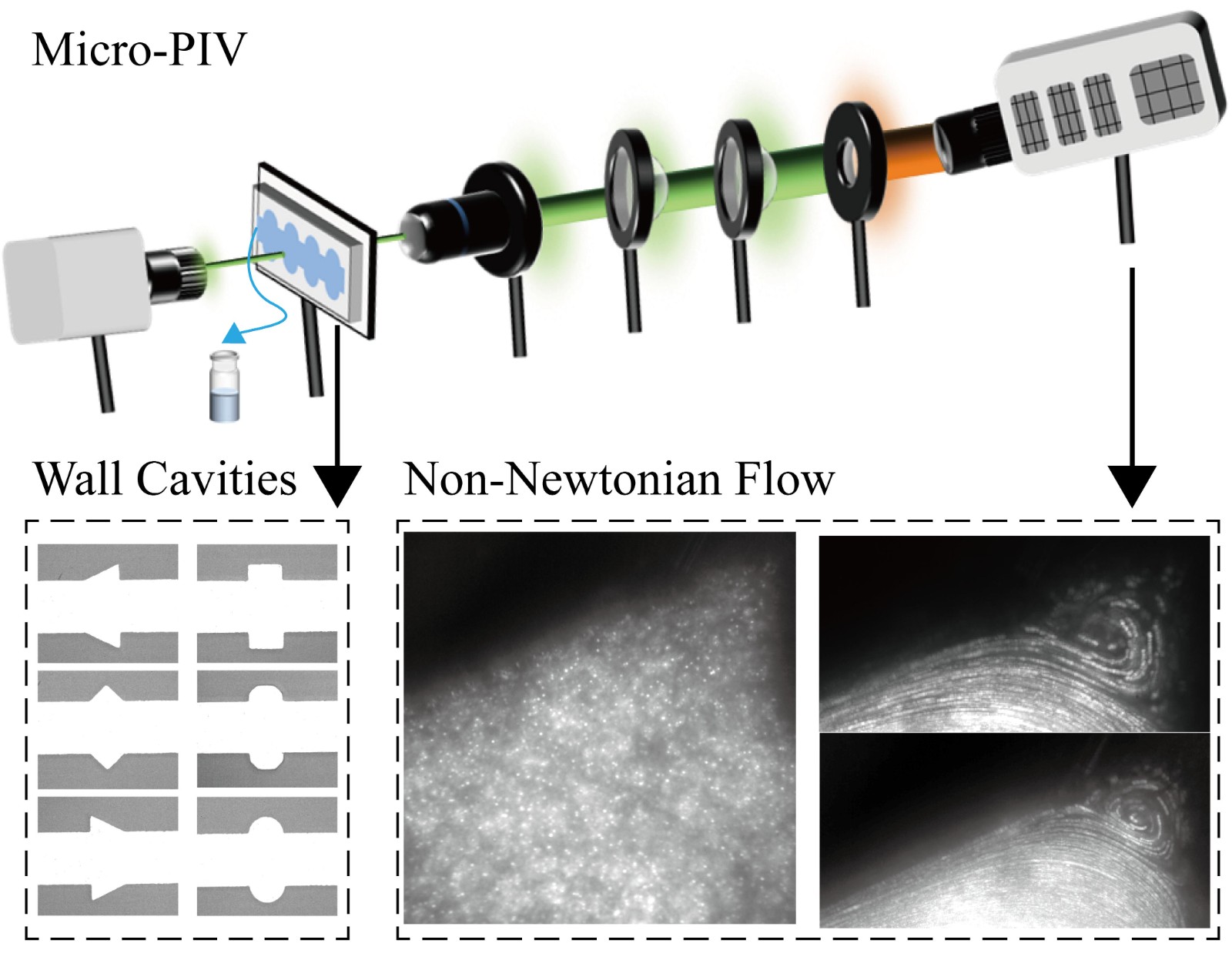
Experimental investigation on the drag reduction mechanism of non-Newtonian flow in microchannels with wall cavities
《Physics of Fluids》
In this work, we conducted a systematical investigation on the flow character This study introduces a novel theory to evaluate the generation of complex emulsions. It demonstrates that an applied electric istics of non-Newtonian flow at microscale targeting on the coupling effect of the non-Newtonian shear thinning effect and cavitation structures for flow resistance reduction, where both the flow characteristics and the detailed flow fields were measured by means of self-built high speed micro Particle Image Velocimetry (micro-PIV).
https://doi.org/10.1063/5.0258077
